Example Image
Topic
Economic Dynamism
Published on
May 13, 2026
Contributors
Richard Epstein
Jonathan Hartley
Michael Munger
Veronique de Rugy
Leonidas Zelmanovitz
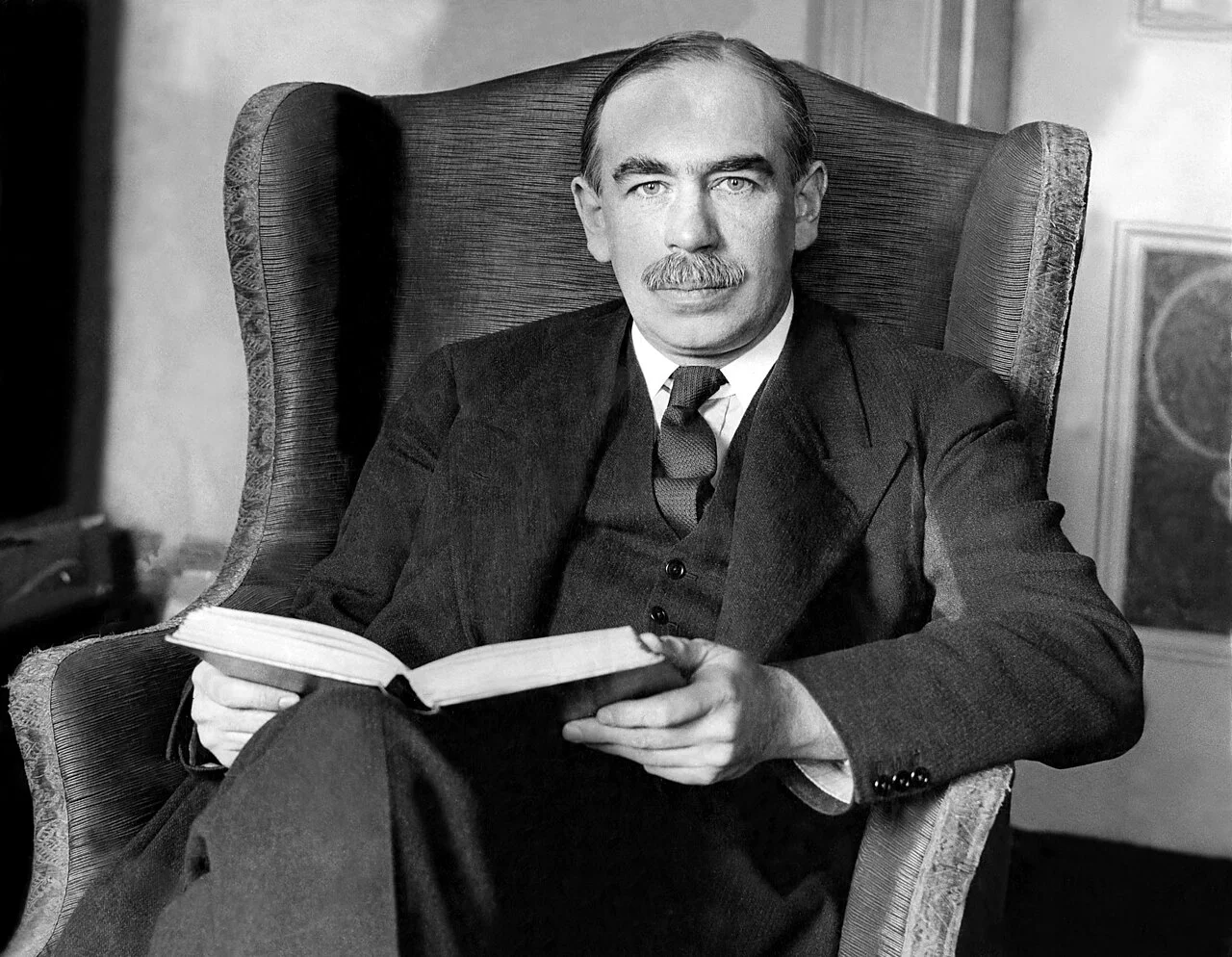
John Maynar Keynes, 1929

The Keynes Symposium

Contributors
Richard Epstein
Richard Epstein
Senior Research Fellow
Richard Epstein
Jonathan Hartley
Jonathan Hartley
Research Fellow
Jonathan Hartley
Michael Munger
Michael Munger
Michael Munger
Veronique de Rugy
Veronique de Rugy
Veronique de Rugy
Leonidas Zelmanovitz
Summary
John Maynard Keynes' General Theory on Employment, Interest, and Money was published a bit over 90 years ago in February 1936. We've asked 5 contributors to assess the weight, influence, and truth of this book which has heavily shaped economic thought.

Summary
John Maynard Keynes' General Theory on Employment, Interest, and Money was published a bit over 90 years ago in February 1936. We've asked 5 contributors to assess the weight, influence, and truth of this book which has heavily shaped economic thought.

Listen to this article

John Maynard Keynes' General Theory on Employment, Interest, and Money was published in 1936 in response to what he thought was the inability of conventional economic policies to heal unemployment in Britain, which had remained high since the end of World War I, and then the arrival of the vast economic downturn that enveloped Britain and Europe. His prescription involved vast government spending to boost aggregate demand, financed by borrowing. Such debt could be repaid by governments during conditions of general prosperity. In the meantime, government spending would boost aggregate demand through a multiplier effect, as jobs and wages recovered, a dividend would be returned to the economy.

Keynesian economics became a major subject of economic research and public policymaking in the twentieth century and continues to provide justifications for government fiscal policy today. On the ninetieth year of publication of Keynes’ General Theory, we asked five of our contributors to assess what the book has contributed to our economic learning and what we need to unlearn.

Richard Epstein, “Keynes, Coase, and Posner"

Jonathan Hartley, "What We’ve Learned About Fiscal Policy Since Keynes"

Michael Munger, “Keynes Was Not a Keynesian

Veronique de Rugy, “Still Slaves of a Defunct Economist

Leonidas Zelmanovitz, “Keynes’s General Theory as an Emergency Brief

10:13
1x
10:13
More articles

Gordon Wood's American Revolution

Pursuit of Happiness
Jun 11, 2026

Gordon Wood Told the Truth About America

Pursuit of Happiness
Jun 11, 2026
View all

Join the newsletter

Receive new publications, news, and updates from the Civitas Institute.

Sign up
The latest from
Economic Dynamism
View all
A Tech Republic, If You Can Keep It

The only real threat to American tech dominance is America itself. 

James Hartley
June 9, 2026
Eating the Rich, Ending Civilization

Will we build a moral architecture disguising a perennial human impulse?

Veronique de Rugy
June 8, 2026
The Great AI Jobs Transition

It's time to develop a posture that treats AI labs and other private actors as the first movers in discovering policy interventions that Congress can then scale, with a particular eye toward younger Americans.

Kevin Frazier
June 3, 2026
Edmund Phelps and the Culture of Dynamism

His research led him to a new theory of what he called “indigenous innovation.”

Ryan Streeter
May 28, 2026
The Contested Legacy of Keynes’ 'General Theory'

Nearly a century after the publication of 'The General Theory,' debates over Keynes’ legacy continue to influence modern economic debate.

Joshua Banerjee
May 27, 2026
Richard Epstein
Jonathan Hartley
Michael Munger
Veronique de Rugy
Leonidas Zelmanovitz
Civitas Outlook
Gordon Wood Told the Truth About America

Gordon Wood showed us that a great historian could also be a regular guy.

Civitas Outlook
Gordon Wood's American Revolution

Widely acknowledged as the pre-eminent historian of the American Founding in our time, Wood was virtually without peer within academic American history today.

Join the newsletter

Get the Civitas Outlook daily digest, plus new research and events.

Thank you! Your submission has been received!
Oops! Something went wrong while submitting the form.

Ideas for
Prosperity

Tomorrow’s leaders need better, bolder ideas about how to make our society freer and more prosperous. That’s why the Civitas Institute exists, plain and simple.
Discover more at Civitas